Showing posts with label IndianWildlife. Show all posts

Friday, October 18, 2013

Meeting Melghat: A volunteer's account Part 2

One evening, as I attempted to photograph a shikra in an open patch of the forest, Ankosh, the guard I was accompanying, suddenly drove my attention to a drab grayish brown bird, perched high in a tree about 100 meters from where we stood. It was just another noisy jungle babbler, I thought. Why was he so exited about this particular babbler when the trees around us were full of them? “Alarm call”, he said. “There is a predator nearby.” Instantly forgetting the shikra, we silently inched forward in the direction of the tree. Crouch - stand - bend - crouch - was the pattern we followed till we stopped at the edge of the open patch. Directly ahead was thick vegetation, making it impossible for us to see what was troubling the bird. To avoid making any sound, we stayed in our crouched positions. The babbler had stopped calling by now, and after a few eerily quiet moments, Ankosh, having decided that the animal has slipped away, stood up. SNAP, the sound of a branch breaking startled us. We quickly scanned the trees ahead, but the leopard was gone.

Morning light bathes the path frequented by a leopard

The narrow winding road that bridges Melghat to the outside world 

A stroll on the road that connects the villages alongside the reserve revealed some of Melghat’s avian citizens. I heard a company of loud alexandrine parakeets long before I saw them fly overhead. A crested serpent eagle, looking stoic and majestic as only eagles can, perched long enough for me to photograph it, before swooping away effortlessly. My time at the reserve was almost at an end, and in a land I hoped to glimpse the tiger, it was birds like the white naped woodpecker, rufous treepie, shikra, and white throated kingfisher that kept me fascinated.

A jungle babbler eyeing me suspiciously

Crested serpent eagle

The sun finally managed to break through the clouds on the morning of my departure. Seeing an opportunity, I made my way to the stream. To say that bathing in a cold water under a hot sun while listening to birdsong is relaxing would be a chronic understatement. After a leisure bath, just as I was getting ready to return to camp, I felt a drizzle on my face and shoulders. Fully expecting to see the sun disappear behind another set of rain clouds, I looked up. On the topmost branches of a tree I was standing under, squatted a troop of gray langurs, peering down at me with a bland expression on their coal black faces. I knew now what that drizzle was. I fondly try and think of it as their way of saying goodbye.


Thursday, September 26, 2013

Frequently Asked Questions about volunteering at Melghat

FAQ on Volunteering

1. Question: I wanted to apply for volunteering in the pilot project. I am currently employed, and would like to know the format of the certificate you would like from my company.

Answer:  .We need a simple letter from your employer stating that you are employed with the company or organization and stating your designation. The letter should be on company letterhead and signed by your employer or a responsible person.


2. Question: I am shocked to hear that single women are not accepted for the WCRS programmes. It is discrimination, and implies that women are not capable of caring enough for the programme. I am deeply interested in the programme and would like to participate in the same. I can adjust with other groups, I am very strong and capable of hard work. I really hope you do away with the conservative ideology which sends wrong signals.

Answer:  " I am glad to know that you are keen to participate in wildlife conservation programs. With respect to our program please understand that there there is no intention to discriminate against women. We know fully well that many women are passionate about wildlife conservation and we would like to encourage them. The only reason for not accepting single women is safety of the participants. The protection camps of the Forest Department are located at remote places and manned by male forest staff and labourers. Hence we are unable to take responsibility for safety of single women. We are willing to accept women provided they are in a group of at least two or accompanied by a male companion. I hope you understand the rationale behind this decision. We place women volunteers in camps with relatively better facilities and closer to the Range headquarters. We would be glad to include you in the program if you can apply together with one or more companions."
Jayant Kulkarni
Executive Director, Conservation
Wildlife Research and Conservation Society

3. Question Is there a last date for applying?

Answer There is no last date for volunteering.   It is an ongoing program

Friday, September 6, 2013

Volunteer to patrol Melghat Tiger Reserve

Forest Patrolling at Melghat Tiger Reserve 

Melghat Tiger Reserve (MTR) is located in Amravati District of Maharashtra and is an important protected area for tiger conservation. The field staff of the tiger reserve patrols the forests regularly for protection of wildlife. Considering the vast area to be patrolled additional manpower from civil society will help to strengthen protection and enhance the status of wildlife in MTR. With this objective Wildlife Research and Conservation Society (WRCS) is implementing a pilot program for volunteer participation in patrolling activities in MTR in collaboration with the tiger reserve authorities for protection of wildlife and forests. Participation in the program will give volunteers an opportunity to witness the forests and wildlife at close quarters and contribute to wildlife conservation. Batches are sent every Sunday, it's a 1 week volunteer program, you are welcome to stay for more than 1 week.

This project is open to Indian Nationals only. 

Want to know more?   Click on the link below


Thursday, August 22, 2013

Survival Kit for Volunteers

Volunteering in Wilderness areas like National Parks and Wildlife Sanctuaries can be exciting, full of photo opportunities and mentally and spiritually stimulating.  In order to take full advantage of these rare opportunities, one has to prepare oneself for life in the open with bare essentials, basic food and amenities.  That said, the experience can be rewarding and comfortable, if you plan your volunteering expeditions well in advance and prepare yourself mentally and physically for a life in the woods.

Step 1.  Read up everything you can lay your hand on the area you are visiting for the purpose of volunteering in a project.

Step 2. Prepare yourself by doing exercises, gymming, running, walking etc so that you are physically fit before you join the volunteering program.

Step 3.  Dress appropriately, from head to toe. You may not have thought about it, but the very clothing you wear is part of your wilderness survival kit..   Dress in layers, and always, even on warm summer days, put a jacket or poncho in your Daypack – Just In Case.

Step 3. Don’t forget to wear a hat. A hat prevents a lot of heat loss in cold weather and protects you from the heat during the really hot days.

Step 4. Take small plastic case (a soap dish will do) and put the following items in it to be taken along with you.  
A whistle
A knife 
matches
candles
water purifying tablets
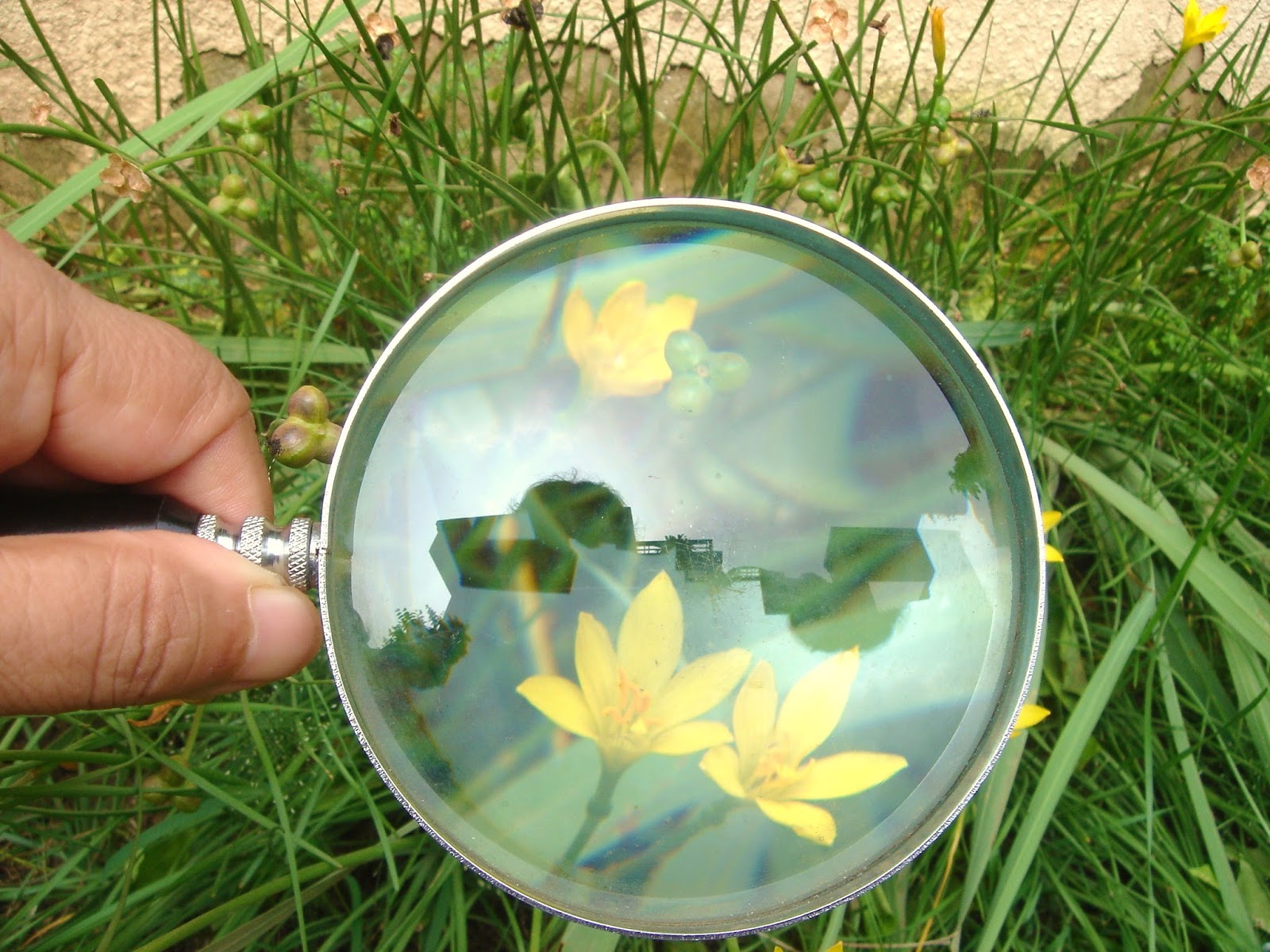
a small magnifying glass ( With plenty of time in hand, look at plants and insects  through the magnifying glass to unveil nature's secrets.) 
needle and thread
band aid, some dettol, some gauze pads

Step 5.  Last but not least
Pay heed to all that the Project Manager tells you when you join the volunteering team.

All the Best! Happy Volunteering.

Sunday, August 18, 2013

Why Volunteer?

Are you willing to spare a week or more for India's wilderness areas?  For an experience which will change your outlook on life forever?  Then read on.

There are a large number of issues concerning conservation of the natural environment, ranging from habitat restoration, alternative livelihoods and human-wildlife conflict, to ecosystem services and eco-tourism practices, waiting to be addressed.

These issues stand to gain tremendously from the active involvement, however small, of volunteers across different age groups and backgrounds.

A responsible and pro-active approach in volunteering is the most effective way for the citizens of India to develop a sense of responsibility and ownership towards their natural inheritance.

http://www.Indianwildlifeclub.com, in existence since 2000, has a resource group of individuals who come from Government and non government institutions working in the field of wilderness conservation.  The club also has among its members a large group of individuals with a passion to do something to protect the last vestiges of wilderness areas left in India.

We propose to offer volunteering solutions, aiming to bridge the gap between potential volunteers and exciting volunteering opportunities around the country by providing active support to conservation initiatives, both governmental and private.

Register to be part of our volunteer database today.

This blog invites posts from volunteers who may send their experiences along with photographs to susan_sharma@hotmail.com

Our vision is to create a pan-India network of motivated volunteers who will be instrumental in conservation efforts across the country.