Tuesday, June 25, 2024


Bugs for Beginners 3.0

Hey Insect Lover!

Are you a photographer constantly snapping shots of insects but struggling to identify them? A teacher eager to guide students on nature trails but stumped by the bugs you encounter? A student interested in an insect project but unsure where to begin? Or perhaps an environmental educator who needs to stay updated on natural history, yet finds insects baffling? Whatever your role, our six-week long hybrid course is designed to help you conquer these challenges. Join India's pioneering hybrid crash course on insects, combining day trips, field camps, and online assignments for a comprehensive learning experience.

Duration: 15 July - 15 October 2024

Course Fee: Rs. 5000/-  Early Bird Offer: Rs. 4500/-  


This course will give you

    1. Insect Group Identification Skills
    2. Understand the role of insects in city ecosystem
    3. Adaptations which are habitat specific
    4. Learning about habitat creation for insects
    5. Develop writing and analytical skills by online referencing for scientific papers
    6. Understanding of ecology through project work

Click on the link below to enroll
https://inaturewatch.org/bugs-for-beginners-1


Sunday, March 5, 2023

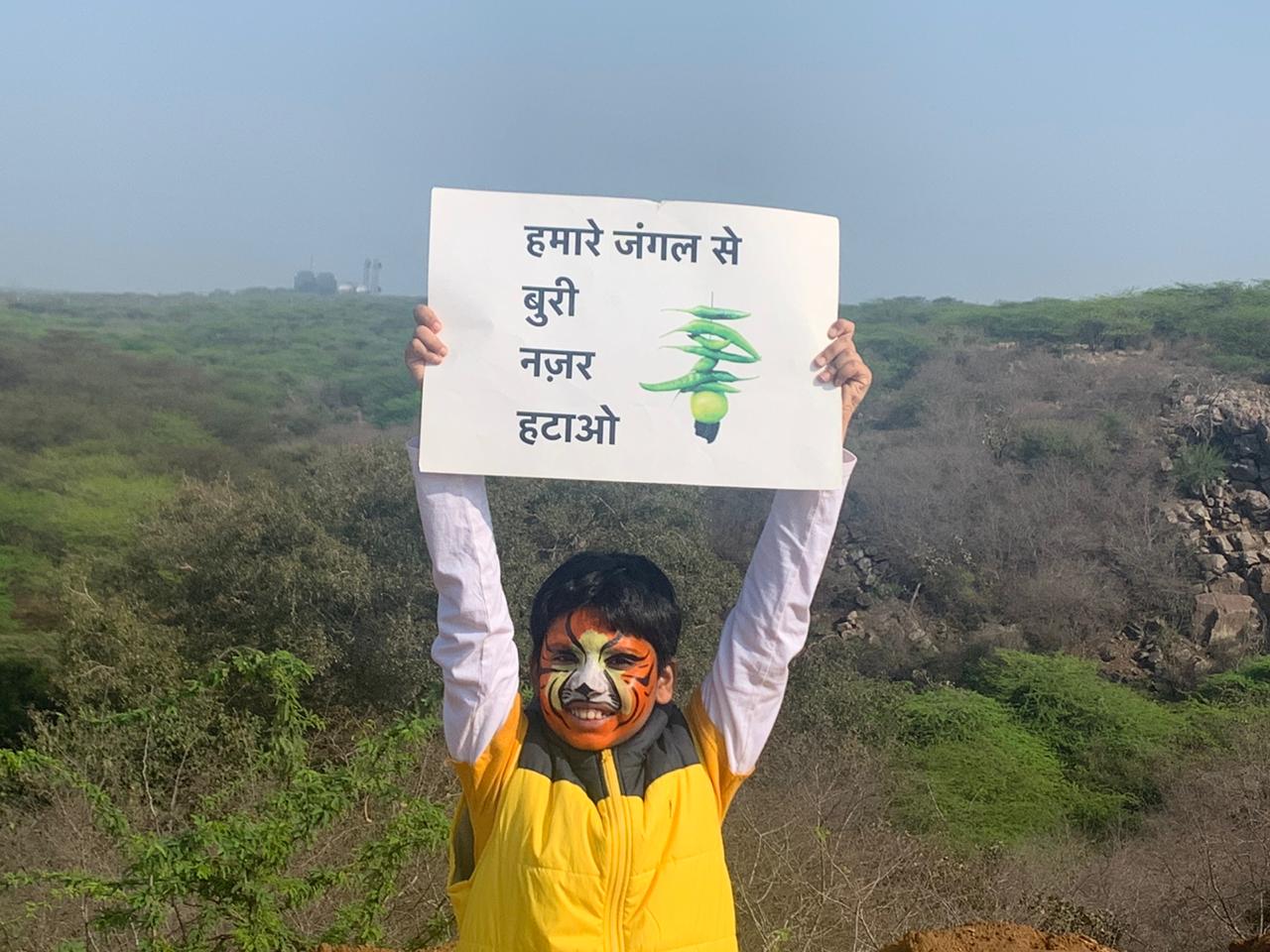
#NoZooInAravallis


Mail India’s Environment Minister and Haryana’s Chief Minister asking them to scrap the zoo safari project in 10,000 acres of NCR Aravallis.

241+

people have already submitted their Inputs. Have you?

Send Mail
Mail India’s Environment Minister and Haryana’s Chief Minister asking them to scrap the zoo safari project in 10,000 acres of NCR Aravallis.

Our Aravallis need to be left alone as home for precious native wildlife and to perform the critical ecological functions for millions of people.

Description:

In April 2022, Haryana’s Chief Minister Mr. Manohar Lal Khattar announced plans for a safari in 10,000 acres in the Aravalli range in Gurugram and Nuh districts of India’s National Capital Region. This project aims to be the largest such project in the world and cover five times the area of the current biggest safari and entertainment park spread over 2000 acres in Sharjah UAE. The term ‘Safari’ gives people the false impression that the proposed Aravalli Safari will be a safari on the lines of what people have experienced in the national parks and wildlife sanctuaries across India like in Corbett, Kanha, Nagarhole etc. Unfortunately, this is far from the truth. The Aravalli Safari project is being conceived and designed as a zoo safari and not a natural jungle safari to see native Aravalli wildlife in their natural habitat. Aravalli Bachao Citizens Movement along with 6 leading conservationists of India that include water conservationist and Magsaysay Award winner Dr Rajendra Singh, conservationist and former member of National Board for Wildlife Prerna Bindra, conservation biologist Neha Sinha and ecologists Dr Ghazala Shahabuddin, Dr Pia Sethi and Meera Chandran, have sent their objections regarding this project to the government and given recommendations. This link has the detailed position paper. https://aravallibachao.wordpress.com/zoo-in-aravallis/ Aravalli Bachao Citizens Movement along with Let India Breathe has launched this email campaign addressed to India’s Environment Minister and Haryana’s Chief Minister and other government authorities asking them to scrap the zoo safari project and suggesting an ecological restoration plan for the 10,000 acres of NCR Aravallis that can be replicated in other areas.

How do I help? It's simple.:

Currently compatiCurrently compatible only for mobile. Please do not mail more than onceilble only for mobile. Please do not mail more than once.


Disclaimer:

This campaign is based on the inputs from the Aravalli Bachao team. It is a citizen-led movement from Deli NCR, please email at aravallibachao@gmail.com if you have any feedback on the campaign.

Citizens and Conservationists ask for the Aravalli zoo safari project to be scrapped and suggest an ecological restoration plan for 10,000 acres of the NCR Aravallis


Zoos in our forests go against ecological thinking and logic.Express love for the Aravalli forests and help save its native wildlife by sending this email to India's Environment Ministry and the Haryana Government asking them to scrap the zoo safari project in 10,000 acres of the NCR Aravallis and instead implement an ecological restoration plan recommended by 6 leading conservationists of India.*SHARE & AMPLIFY THIS PETITION*Help save the highly polluted and water stressed Delhi - NCRs lifeline for clean air and water from commercialisation and unwanted construction.#NoZooInAravallis#AravalliBachao

Friday, December 9, 2022

Play outdoors


 Playing a sport adds to a child's upbringing.  Here is an opportunity to take on football!

Roots Football, much admired academy of Bangalore (with over ten years of experience and many national level foot ball teams to their credit, is coming to the National Capital Region.  

Register for a free trial at 

https://www.rootsfootball.in/register-for-free-trial-class-delhi-ncr


Thursday, November 11, 2021

Internship for snakes


From Gerry Martin" Our work in snakebite mitigation and management is scaling up again and we need a few more hands on deck. This is an opportunity to work in the field, at a grassroots level to understand the dynamics of snakebite in a rural landscape. Please get in touch with Sumanth on sbindumadhav@hsi.org if you'd like to take on this internship. #snakebite #humanwildlifeconflict #fieldwork #epidemiology #ruraldevelopment #ruralcommunities #ruralindia"


Saturday, January 16, 2016

Study on citizen volunteers

"More than 100 ‘citizen scientists’ who had volunteered with the longest-running tiger research program in the world, led by WCS in India, were surveyed by the authors. Since 1990s, over 4000 such volunteers have been trained by WCS to survey wildlife populations and local communities across several Indian states including Karnataka, Maharashtra, Tamil Nadu, Kerala, Andhra Pradesh, Madhya Pradesh, Rajasthan and others."


................The study revealed several important impacts of volunteering with WCS and CWS. Over 80% of the respondents acknowledged increased knowledge and concern for wildlife rooted in science. More than 60% said that they were able to use the knowledge learned during volunteering with WCS-India in other aspects of their lives. Several also indicated greater spiritual understanding about life in general................
read more at


Wednesday, March 5, 2014

5 POINTS TO CONSIDER BEFORE ENTERING A FOREST

5 POINTS TO CONSIDER BEFORE ENTERING A FOREST
-Nirmal Kulkarni


  1. Always let a family member/friend/colleague know the area and approx. location or range/beat of the forest as a rule. This is the first precautionary rule that every serious amateur / professional student of ecology or wildlife enthusiast should follow. It helps a lot in the long run in times of any eventuality.
  2. Always enter a Protected area with permits/ entrance tickets and after paying prescribed fees. In case of reserved forests and community forests one must inform the local forest officer or village community forest committee member before entry into a forest.
  3. Read up on the area/habitat/ current social and forest related issues in the area. It is also a good habit to cross check from those who have worked in the area before. A detailed map is always an asset too.
  4. First Aid Kit/ torch/water bottle/whistle/good walking shoes are essentials that one MUST have while heading out on a field trip. Do not attempt to borrow or share any of these at any time during a field trip. Get your own set of essentials and always be prepared.
  5. Be very clear on why you are visiting/ entering a forest area in the first place. Is it for leisure/investigation/survey/photography- a combination of any of these or anything different? It is essential you do just that and do not change focus. Remember, forest sojourns impact wildlife too. 

 Nirmal Kulkarni can be contacted at ophidian_nirmal@yahoo.co.in

Saturday, January 25, 2014

Getting lost in the woods...and surviving


Five tips if you get lost
No one plans to get lost, but it can happen; yes, it can even in these days of mobiles and Google maps.  We hear of people getting lost in forests without food or water but surviving for many days.  But how?  By eating lizards, squirrels, insects? We’re not saying that you need to practice your hunting skills, but the point is –  you must do what you have to do and survice. Most people would.

Whenever you enter the wilderness there are precautions you should take to make sure you’re prepared for anything.
These tips will get you started.

1) Plan for Your Situation

Every situation is different and should be treated as such. If you’re hiking in an area with unpredictable weather patterns, plan for warm and cool clothing. If you’re going hiking during the summer, pack plenty of water and wear light colored clothing. If you’re trekking into the wild by yourself, let a friend or family member know where you’re going, and when you plan on returning.

2) Know Where You Are

Study a map of the area or bring one with you. Being able to identify landmarks or waterways could save you in the event you get lost. Always carry a compass so you can triangulate your position.

3) Don’t Panic

The natural reaction is to panic when we are unsure of our surroundings. Panicking can waste crucial energy and affect your state of mind. Use the acronym STOP to regain your composure and get in the right mental state.

S = Sit Down
T = Think About The Situation
O = Observe Your Surroundings
P = Prepare for Survival by Gathering Materials

4) Call For Help

If you’re out hunting, firing your weapon can direct attention towards you and hopefully lead to your rescue. Unfortunately, most people aren’t carrying when they’re out hiking or camping.  A great alternative is a whistle, which studies have shown to be the least cost and most effective way of getting attention.

5) Be Prepared

Having a whistle is just one of many survival tools that can help you in a dire situation. A water filtration straw can help you drink safely from a river or stream, and a fire striker can easily assist you in getting a heat source going. But If you ask any survival enthusiast, they would probably tell you their knife is the most important. And for good reason. A survival knife can be used for:

Cutting/Slicing
Digging
Splitting
Self-Defense
First Aid Tool
Food Prep
Shelter Building
Fire Making
Hunting Weapon
Prying Tool
Signaling
Hammering
Make-Shift Screwdriver

Tips courtesy @ SurvivalKit.com Blog

Friday, October 18, 2013

Meeting Melghat: A volunteer's account Part 2

One evening, as I attempted to photograph a shikra in an open patch of the forest, Ankosh, the guard I was accompanying, suddenly drove my attention to a drab grayish brown bird, perched high in a tree about 100 meters from where we stood. It was just another noisy jungle babbler, I thought. Why was he so exited about this particular babbler when the trees around us were full of them? “Alarm call”, he said. “There is a predator nearby.” Instantly forgetting the shikra, we silently inched forward in the direction of the tree. Crouch - stand - bend - crouch - was the pattern we followed till we stopped at the edge of the open patch. Directly ahead was thick vegetation, making it impossible for us to see what was troubling the bird. To avoid making any sound, we stayed in our crouched positions. The babbler had stopped calling by now, and after a few eerily quiet moments, Ankosh, having decided that the animal has slipped away, stood up. SNAP, the sound of a branch breaking startled us. We quickly scanned the trees ahead, but the leopard was gone.

Morning light bathes the path frequented by a leopard

The narrow winding road that bridges Melghat to the outside world 

A stroll on the road that connects the villages alongside the reserve revealed some of Melghat’s avian citizens. I heard a company of loud alexandrine parakeets long before I saw them fly overhead. A crested serpent eagle, looking stoic and majestic as only eagles can, perched long enough for me to photograph it, before swooping away effortlessly. My time at the reserve was almost at an end, and in a land I hoped to glimpse the tiger, it was birds like the white naped woodpecker, rufous treepie, shikra, and white throated kingfisher that kept me fascinated.

A jungle babbler eyeing me suspiciously

Crested serpent eagle

The sun finally managed to break through the clouds on the morning of my departure. Seeing an opportunity, I made my way to the stream. To say that bathing in a cold water under a hot sun while listening to birdsong is relaxing would be a chronic understatement. After a leisure bath, just as I was getting ready to return to camp, I felt a drizzle on my face and shoulders. Fully expecting to see the sun disappear behind another set of rain clouds, I looked up. On the topmost branches of a tree I was standing under, squatted a troop of gray langurs, peering down at me with a bland expression on their coal black faces. I knew now what that drizzle was. I fondly try and think of it as their way of saying goodbye.


Meeting Melghat: A volunteer's account Part 1


A stream gushed through the teak dominated forest that surrounded the camp, running on its stony bed till it formed a waterfall so loud, it could drown a person’s thoughts out. As I lay listening to this watery soundtrack - occasionally broken by the Forest guard’s snores, some over enthusiastic crickets, and a large rat hunting for a snack - I wondered about the wild inhabitants of this stunning Maharashtrian forest, lurking about in the dark, unaware of the strange human who had tried his luck at spotting some of them.

Waterfall, as seen from the watchtower at '0 point'

The stream greeted me when I first arrived at Bori Ghogara, a camp which sits on the border of Melghat Tiger Reserve. The trusty Mahindra Marshall which drove me here could not risk the crossing. So I, with my bags of vegetables, clothes and camera gear, crossed on foot with as much grace as a blindfolded tightrope walker.

Meeting of the Ghats - Hills as far as the eye can see

After introductions with the camp’s staff, I wandered back outside to get a proper look at the ruggedly hilly central Indian landscape I was in. The first thing any visitor to Melghat in the Monsoons will notice is the thick blanket of green that drapes them. The grass bordering the trails, the broad leaves of trees, the moss in the hollows of trunks, even the walls of the camp come in every imaginable shade of green. In the coming months, as summer approaches, this tropical dry deciduous forest will shed most of its green and turn golden brown, bearing very little resemblance to the scene I was witnessing.

Gunjan, out patrolling in his camouflaged outfit on a rainy day 

Over the next eight days, I assisted the Forest guard and his troops on their daily patrols in the forest, documenting what I saw, and observing the excellent tracking and identification skills on display by the mostly tribal staff. The rain, which was unrelenting, made our progress slow. Yet we walked, past rising streams and down slippery slopes, with stomachs stuffed with so much food (a heavy breakfast cum lunch to get us through the day) that the simple act of bending to examine a hoof or paw-print turned into a clumsy affair. 

Paw-prints of a mother leopard and her cub

The creatures of Melghat rarely, if ever, showed themselves. But a leopard and her cub, a lone sloth bear, wild pigs, and an occasional munjtac would all leave their fresh and unmistakable impressions in the soft, wet mud of the forest floor. During the patrols, I remember the feeling of being acutely aware that I was not alone, for even if the animals could not be seen, I knew they were in the vicinity, perfectly hidden behind a veil of green that the forest provided.

Continued in Part 2


Sunday, October 13, 2013

Human rights issues- Can technology help?


Technology/Internet is silently transforming the world into an inclusive world.  Technology by itself is a great leveler;  when used appropriately it is the biggest tool we have got in the developing world.  Human rights issues tend to get attention in a very anecdotal fashion because of media attention, activists groups etc.  In the bargain we tend to forget that human rights issues are universal.  The need for basic amenities and self empowerment are universal issues applicable to every human being.

That is where technology comes in as a great equalizer, as a "magic wand" capable of analyzing millions of statistics in a jiffy and as a tool provider which can literally work on the ground.

As human population increases, human rights issues in the developing worlds grow disproportionately as most of our developmental goals during the first and second industrial revolution focused on growth in terms of generating GDP for the country.  Individuals at the bottom of the pyramid get overlooked unless they manage to contribute their bit towards GDP.  A few rags to riches stories are hyped up by the media but the majority (especially in India) remain where they are, in abysmal conditions as far as human rights go.

Can technology come to their succor?  

Technology itself has not got out of the spiral of innovation and applications (the financial spiral) to be able to concentrate on "uses" of the various applications.  The technology savvy Indians barely got time to look up since the demand for their skills have been very high.  But things are changing, albeit slowly.  This is where the technology mission of Nandan Nilekani and Sam Pitroda in India score.  Sam Pitroda is the father of India's Telecom revolution.   He is behind the technological changes which ensured that sixty million of India's 100 million people remain connected through the mobile network.

Health care, critical weather information for agriculture,  basic education tools are some of the issues affecting the bottom of the pyramid that are getting disseminated through the vast mobile network in India.  India sells 8 million mobile phones a month,  90% of which are to pre-paid users representing unemployed  youth and unorganized labor sector).  This is the sector which is exploited, abused and form the majority  victims of human rights violations

Mr. Nandan Nilekani is currently the Chairman of the Unique Identification Authority of India (UIDAI)—which aims to provide a unique identification number for all residents of India. The unique identity scheme is at work connecting the billion people in a network which will one day achieve a hub and spoke delivery system based on actual need and devoid of spillages all along the way.  By 2014, 600 million out of 1000 million Indians would be covered by the scheme.  Armed with the unique id (Aadhar  card), bank account and a mobile the individual can transform himself to leverage technology for utilizing public services without a middle man and thus leapfrog into a new era.

The language spoken by these technology czars is Greek to many Indians even in the so called cream of society.  The criticism is harsh, the expectations sky high.  Terms like "hub and spoke delivery", "mentoring by sensors",etc are becoming part of the jargon in the third industrial revolution being witnessed by us.  The sooner the pessimists accept these, the better it will be for all of us.

Can Internet reach the grass roots?  At IndianWildlifeClub.com we have been using online tools (Internet and the social media) to reach out and motivate communities to protect wildlife and wild lands.


Membership profile of IndianWildlifeClub.com

Online environmental programs we promote have had good enrollment from second tier cities.  The wilderness volunteer program we promote has been getting volunteers from the unemployed youth as well as the highly educated urban youth.  A beginning is being made through these programs to bridge the chasm which today exists between the developed world and the so called under developed society.   As all of us know human rights violations occur when natural resources are plundered without a thought for the communities that thrive in these areas.  Understanding and caring for our natural resources is the beginning of wanting to protect them.

The Internet users in India are only about 150 million as of now.  With the rolling out of broad band Internet to reach the villages of India, the the message of volunteering for wilderness India is expected to spread far and wide.  Dreams and aspirations of the ordinary Indian are frustrated at almost every step, but there is light at the end of the tunnel.

Thursday, September 26, 2013

Frequently Asked Questions about volunteering at Melghat

FAQ on Volunteering

1. Question: I wanted to apply for volunteering in the pilot project. I am currently employed, and would like to know the format of the certificate you would like from my company.

Answer:  .We need a simple letter from your employer stating that you are employed with the company or organization and stating your designation. The letter should be on company letterhead and signed by your employer or a responsible person.


2. Question: I am shocked to hear that single women are not accepted for the WCRS programmes. It is discrimination, and implies that women are not capable of caring enough for the programme. I am deeply interested in the programme and would like to participate in the same. I can adjust with other groups, I am very strong and capable of hard work. I really hope you do away with the conservative ideology which sends wrong signals.

Answer:  " I am glad to know that you are keen to participate in wildlife conservation programs. With respect to our program please understand that there there is no intention to discriminate against women. We know fully well that many women are passionate about wildlife conservation and we would like to encourage them. The only reason for not accepting single women is safety of the participants. The protection camps of the Forest Department are located at remote places and manned by male forest staff and labourers. Hence we are unable to take responsibility for safety of single women. We are willing to accept women provided they are in a group of at least two or accompanied by a male companion. I hope you understand the rationale behind this decision. We place women volunteers in camps with relatively better facilities and closer to the Range headquarters. We would be glad to include you in the program if you can apply together with one or more companions."
Jayant Kulkarni
Executive Director, Conservation
Wildlife Research and Conservation Society

3. Question Is there a last date for applying?

Answer There is no last date for volunteering.   It is an ongoing program

Friday, September 6, 2013

Volunteer to patrol Melghat Tiger Reserve

Forest Patrolling at Melghat Tiger Reserve 

Melghat Tiger Reserve (MTR) is located in Amravati District of Maharashtra and is an important protected area for tiger conservation. The field staff of the tiger reserve patrols the forests regularly for protection of wildlife. Considering the vast area to be patrolled additional manpower from civil society will help to strengthen protection and enhance the status of wildlife in MTR. With this objective Wildlife Research and Conservation Society (WRCS) is implementing a pilot program for volunteer participation in patrolling activities in MTR in collaboration with the tiger reserve authorities for protection of wildlife and forests. Participation in the program will give volunteers an opportunity to witness the forests and wildlife at close quarters and contribute to wildlife conservation. Batches are sent every Sunday, it's a 1 week volunteer program, you are welcome to stay for more than 1 week.

This project is open to Indian Nationals only. 

Want to know more?   Click on the link below


Thursday, August 22, 2013

Survival Kit for Volunteers

Volunteering in Wilderness areas like National Parks and Wildlife Sanctuaries can be exciting, full of photo opportunities and mentally and spiritually stimulating.  In order to take full advantage of these rare opportunities, one has to prepare oneself for life in the open with bare essentials, basic food and amenities.  That said, the experience can be rewarding and comfortable, if you plan your volunteering expeditions well in advance and prepare yourself mentally and physically for a life in the woods.

Step 1.  Read up everything you can lay your hand on the area you are visiting for the purpose of volunteering in a project.

Step 2. Prepare yourself by doing exercises, gymming, running, walking etc so that you are physically fit before you join the volunteering program.

Step 3.  Dress appropriately, from head to toe. You may not have thought about it, but the very clothing you wear is part of your wilderness survival kit..   Dress in layers, and always, even on warm summer days, put a jacket or poncho in your Daypack – Just In Case.

Step 3. Don’t forget to wear a hat. A hat prevents a lot of heat loss in cold weather and protects you from the heat during the really hot days.

Step 4. Take small plastic case (a soap dish will do) and put the following items in it to be taken along with you.  
A whistle
A knife 
matches
candles
water purifying tablets
a small magnifying glass ( With plenty of time in hand, look at plants and insects  through the magnifying glass to unveil nature's secrets.) 
needle and thread
band aid, some dettol, some gauze pads

Step 5.  Last but not least
Pay heed to all that the Project Manager tells you when you join the volunteering team.

All the Best! Happy Volunteering.

Sunday, August 18, 2013

Why Volunteer?

Are you willing to spare a week or more for India's wilderness areas?  For an experience which will change your outlook on life forever?  Then read on.

There are a large number of issues concerning conservation of the natural environment, ranging from habitat restoration, alternative livelihoods and human-wildlife conflict, to ecosystem services and eco-tourism practices, waiting to be addressed.

These issues stand to gain tremendously from the active involvement, however small, of volunteers across different age groups and backgrounds.

A responsible and pro-active approach in volunteering is the most effective way for the citizens of India to develop a sense of responsibility and ownership towards their natural inheritance.

http://www.Indianwildlifeclub.com, in existence since 2000, has a resource group of individuals who come from Government and non government institutions working in the field of wilderness conservation.  The club also has among its members a large group of individuals with a passion to do something to protect the last vestiges of wilderness areas left in India.

We propose to offer volunteering solutions, aiming to bridge the gap between potential volunteers and exciting volunteering opportunities around the country by providing active support to conservation initiatives, both governmental and private.

Register to be part of our volunteer database today.

This blog invites posts from volunteers who may send their experiences along with photographs to susan_sharma@hotmail.com

Our vision is to create a pan-India network of motivated volunteers who will be instrumental in conservation efforts across the country.